Low-Maintenance Cat Breeds for Easy Coat Care
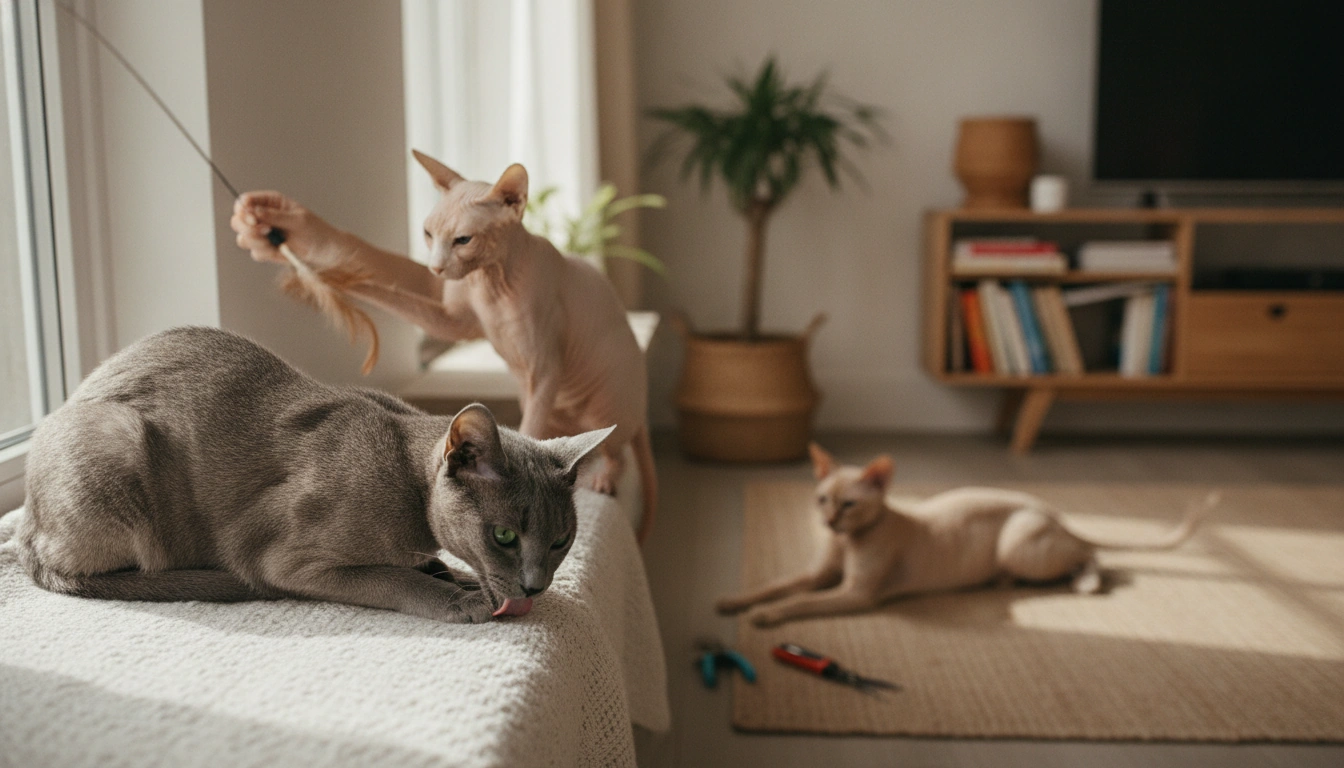
Which cat breeds are lowest maintenance for grooming and coat care?
If brushing battles and constant lint-rolling aren’t your thing, the easiest cats to live with are typically short-haired breeds with tight, close-lying coats and minimal shedding. While every cat benefits from occasional brushing and routine nail trims, certain breeds tend to need less hands-on coat care week to week.
Top low-grooming cat breeds
Domestic Shorthair (mixed-breed): Often the simplest option. Many have sleek coats that only need a quick brush now and then to remove loose hair and reduce shedding around the house.
American Shorthair: Known for a dense but manageable coat. A weekly brush is usually enough, with a little extra during seasonal shedding.
British Shorthair: Plush, thick fur that doesn’t mat easily. They do shed, but routine brushing (once or twice a week) typically keeps the coat tidy without intensive grooming.
Russian Blue: Short, fine, double coat that’s famous for feeling velvety and staying neat. Many owners find they can maintain the coat with minimal brushing.
Siamese: Very short coat with low mat risk. They’re often considered “wash-and-wear” cats—occasional brushing and normal hygiene habits go a long way.
Burmese: Short, satin-like coat that tends to stay sleek. A quick brush or grooming glove session can help with loose hair and shine.
What “low maintenance” still includes
Even low-grooming breeds need basic care: nail trims every few weeks, dental support, and ear checks. If a cat stops self-grooming or develops dandruff, excess shedding, or patches of thinning fur, a vet visit can help rule out skin issues, allergies, or stress.
For more low-grooming pet ideas and practical home-friendly picks, visit this guide to low-grooming pets for busy homes.
For Low-Maintenance Cat Breeds for Easy Coat Care, the best answer depends on fit, material, care instructions, and how the product will be used day to day.
FAQ
Do short-haired cats still need brushing?
Yes, but usually less often. A quick brush once a week (or even every other week for some cats) helps remove loose hair, supports skin health, and can reduce hairballs.










Leave a comment